Muscle Is Your Retirement Account: Are You Investing Enough?
Muscle Is Your Retirement Account: Are You Investing Enough?
You’ve probably spent years thinking about retirement. Maybe you’ve contributed to a 401(k), built up savings, paid off your mortgage, or carefully planned how you’ll spend your time once you’re no longer working.But there’s another retirement account you may not be thinking about nearly enough: Your muscles.
And unlike a financial account, you can’t simply start making bigger contributions at 70 and expect everything to catch up overnight. The muscle you build and maintain today can play an important role in how independently, confidently, and actively you live in the years ahead.
So, are you investing enough?
Muscle Is More Than Strength
When most people hear the word “muscle,” they picture lifting weights or getting stronger. Strength certainly matters. But muscle does much more than help you carry a suitcase or lift a grandchild. Healthy muscle supports the everyday things that make life feel like your life. Getting out of a chair without pushing off the arms. Climbing a flight of stairs. Carrying groceries into the house. Getting up from the floor. Walking confidently through a parking lot. Reaching for something on a high shelf. These may sound like small things. But together, they add up to something much bigger: independence.
The stronger and more capable your body is, the more options you have in your daily life.
Your Independence Account
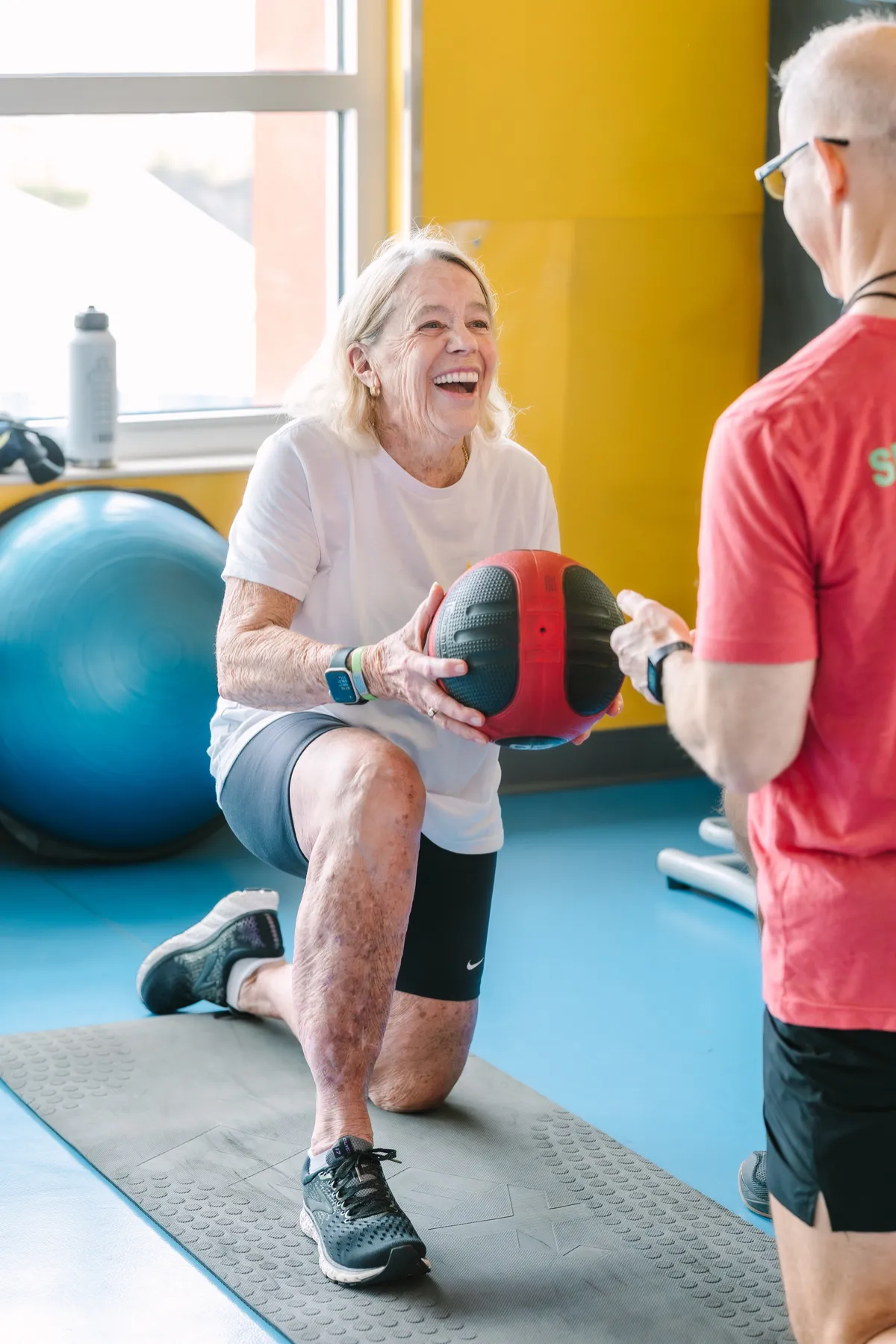
Think of muscle like a retirement account for your physical independence. Every strength workout is a contribution. Every time you challenge your muscles appropriately, you're sending your body a message: I still need this. And that's important because muscle naturally declines as we age. Without regular resistance exercise and adequate nutrition, we can gradually lose strength and muscle mass.The goal isn't to become a bodybuilder.The goal is to have enough strength in the bank to handle life.
Because retirement should be about having the freedom to travel, play with the grandkids, garden, golf, dance, hike, volunteer, or simply get through your day without constantly wondering, Can I do that?
Muscle and Your Metabolism
Here's another reason muscle deserves your attention: metabolism. Muscle tissue is metabolically active, meaning your body uses energy to maintain it. As we lose muscle over time, our body composition can change—and maintaining a healthy metabolism becomes increasingly important. That doesn't mean building muscle is a magic solution for weight management. It isn't.
But strength training, combined with good nutrition and regular movement, can help you maintain lean muscle while supporting a healthy body composition. In other words, don't just focus on the number on the scale. Pay attention to what your body is capable of doing.
Muscle Is Part of Your Balance Strategy
Balance isn't just about standing on one foot. Good balance depends on several systems working together, including your vision, inner ear, nervous system, and muscles. And your muscles matter. Strong legs and a strong core can help you control your body when you step, turn, climb stairs, or encounter an unexpected change in the ground beneath you. Think about the difference between stumbling and recovering versus stumbling and falling. Having strength and control gives your body more tools to respond. That's why a well-rounded senior fitness program shouldn't focus exclusively on walking or cardio.
Strength, balance, mobility, and coordination all deserve a place in your fitness portfolio.
And What About Longevity?
This is where the investment analogy gets especially interesting. Research has consistently linked physical activity and muscle strength with important health outcomes as we age. While no workout can guarantee a longer life, maintaining physical function is strongly connected to healthy aging.
And perhaps the more useful question isn't simply, How long will I live? It's: How do I want to live while I'm here?
Longevity without function isn't necessarily the goal. We want more years that include the ability to move, participate, explore, connect, and make choices about how we spend our time. That's where muscle comes in.
You Don't Need to Start Big
If you're reading this and thinking, Well, I haven't been strength training, so I'm already behind, don't panic. You don't need to make a massive contribution all at once. Start where you are.
For some people, that might mean sitting and standing from a sturdy chair several times. For others, it might mean working with resistance bands, light dumbbells, or machines.
The right starting point depends on your current fitness level, health history, mobility, and goals. And just like with financial investing, consistency matters. A little effort repeated regularly can add up to something meaningful over time.
Make Your Future Self the Beneficiary
Imagine your 80-year-old self. What would that person want from you today? Probably not a six-pack. Probably not a personal record. Maybe it's the ability to get up from the floor. To walk through an airport without worrying about every step. To carry your own bags. To get in and out of the car easily. To travel with your partner. To play with your grandchildren. To live in your own home and continue doing the things you enjoy.
Those are the dividends of physical fitness.
So, when you think about retirement planning, don't look only at your financial statements. Take a look at your muscle account, too.
Are you making regular contributions? Are you challenging your body appropriately? Are you supporting those workouts with enough protein and nutritious food? Are you working on balance and mobility, too? Because the goal isn't simply to have money saved for retirement.
It's to have the strength, balance, energy, and confidence to enjoy the retirement you've worked so hard to create.
Your future self is counting on today's investment.
Ready to Invest in Your Future? Let Lowcountry Elite Performance help you build strength for the life you want to live. Our goal is to help you stay strong, capable, confident, and active so you can keep doing the things that matter most to you.
Your muscle account deserves regular contributions—and it's never too late to start investing.
📧 Email us at [email protected]
🌐 Visit: www.locoeliteperformance.com